The X-Men, a team of ostracized mutants fighting for acceptance in a world that fears them, have long served as a powerful allegory for marginalized groups. But how does this narrative specifically illuminate the concept of intersectionality, and how does it fuel the pursuit of unity? This essay will explore how the X-Men comics, through their diverse characters and storylines, provide a compelling framework for understanding intersectional theory. Furthermore, it will detail the database search process used to gather relevant research. Intersectionality, a term coined by Kimberlé Crenshaw (2016), recognizes that various social and political identities (e.g., race, gender, class, sexual orientation) combine to create unique experiences of discrimination and privilege. It moves beyond single-axis analyses of oppression and acknowledges that individuals can experience multiple, overlapping forms of marginalization.

The X-Men franchise, a cornerstone of superhero cinema, has long been celebrated for its allegorical depth. Beyond the spectacle of mutant powers and global threats, these films offer a potent commentary on societal prejudices. This essay will examine how the 2000 film, in particular, uses the narrative of the X-Men to explore themes of racial politics, the complexities of identity, and the struggle for social acceptance. We will analyze how the film draws parallels between the mutant experience and the historical struggles of marginalized groups. The X-Men films, as argued by Mikhail Lyubansky (2011) in his Psychology Today blog, are deeply rooted in racial politics. Lyubansky contends that the film’s narrative framework, where mutants are feared and misunderstood by the dominant human society, directly reflects the historical and ongoing discrimination faced by racial minorities. The film uses this allegory to explore the fear of the “other” and the resulting prejudice and violence. The X-Men, like many marginalized groups, are forced to navigate a world that simultaneously fears and misunderstands them. “drawing a variety of explicit and unmistakable parallels between Xaviers and Magnetos fight for mutant right the U.S. Civil Rights movements of the 1960s.” (The Racial Politics of X- Men” from Psychology Today (2011) Pg. 2)

Sexuality, Race, and Respectability” (Christopher B. Zeichmann) suggests, the X-Men films have been criticized for “domesticating dissent.” Zeichmann’s argument suggests that while the films acknowledge social injustices, they ultimately promote a narrative of assimilation rather than radical change. The X-Men, in their quest for acceptance, often strive to be seen as “respectable” and aim to integrate into the existing social order. This can be seen as a complex portrayal of the struggle for acceptance, where the desire for belonging can sometimes lead to a compromise of radical ideals. “Homosexuality, like mutancy, is a hidden difference gays walk among us, and we never know who might be one. It is a condition that manifests itself in adolescence, and when it does, it frequently causes the confused and scared young person to be ostracized from both community and family. “ (X-Men Films and the Domestication of Dissent: Sexuality, Race, and Respectability” (2023) pg.177) The 2000 film, in particular, focuses on the formation of identity in the face of adversity. The film’s characters grapple with their mutant identities and the external pressures to conform or hide their true selves. The narrative highlights the internal conflicts faced by individuals struggling with their
identities and the need to find a community where they can be accepted. The X-Men’s school, led by Professor Xavier, becomes a haven for these individuals, offering a space where they can embrace their differences and learn to control their powers.
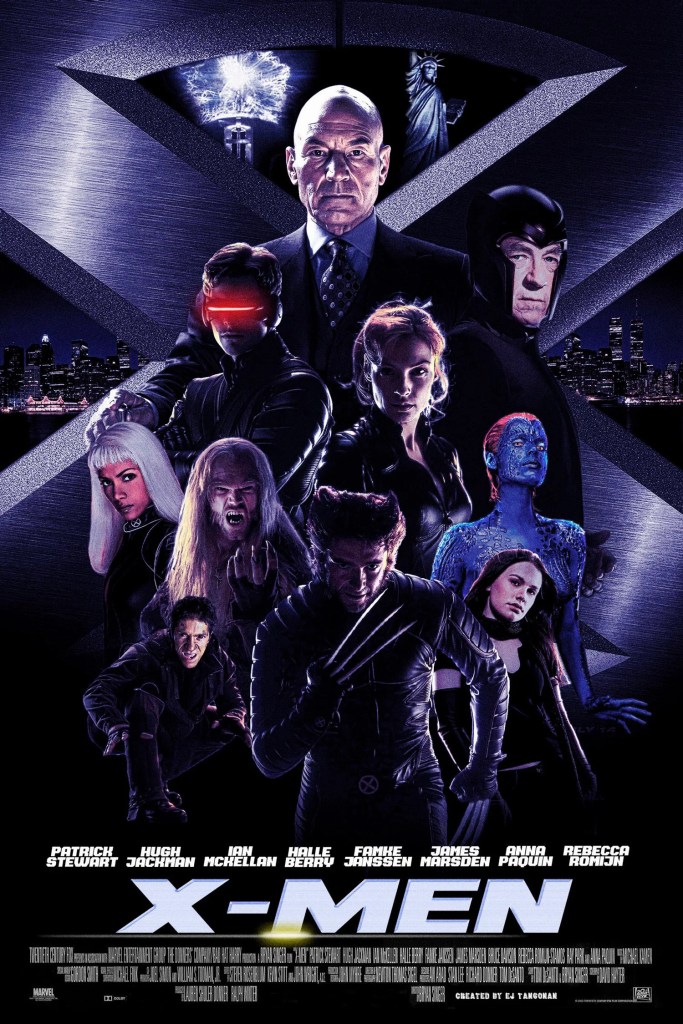
In conclusion, the X-Men comic series serves as a powerful metaphor for understanding oppression and intersectionality, ultimately inspiring a quest for unity. The narrative mirrors real-world struggles, using mutant experiences to illuminate the complexities of prejudice, discrimination, and the fight for acceptance. The X-Men’s diverse team composition and the challenges they face resonate with marginalized groups, highlighting the importance of solidarity. (Mikhail Lyubansky; Psychology Today, 2011) Future research could explore how contemporary adaptations of the X-Men, such as the 2000 film, reflect evolving social attitudes towards identity and inclusion. Further analysis of the X-Men’s impact on social justice movements is also warranted. Ultimately, the X-Men’s enduring legacy lies in its ability to spark conversations about equality and the ongoing pursuit of a more just world. (Christopher B. The X-Men (2000) Film Zeichmann; Academia.edu,n.d.) References: “The Racial Politics of X-Men” from Psychology Today (2011) and “X-Men Films and the Domestication of Dissent: Sexuality, Race, and Respectability” from Academia.edu (2023),
 Welcome to the X-Gene